
For Patients
Learn about modern vision correction and cataract surgery, including EVO ICL, LASIK, PRK, SMILE, refractive lens exchange, and cataract surgery. These answers explain what each procedure does, who may be a candidate, and how the options differ.
EVO ICL
EVO ICL is a vision-correction lens under the surface of the eye. It corrects nearsightedness and astigmatism without permanently reshaping the cornea or changing the eye's anatomy and can be removed or exchanged later if needed.
What is EVO ICL?
EVO ICL is a vision-correction lens placed under the surface of the eye. Unlike LASIK, SMILE, or PRK, EVO ICL corrects vision without permanently reshaping the cornea or changing the eye's anatomy. The lens can also be removed or exchanged later if needed.
Who is a good candidate for EVO ICL?
EVO ICL is generally considered for adults with nearsightedness, with or without astigmatism, who have stable vision and suitable eye anatomy. It can be particularly useful for people with high prescriptions, thin corneas, dry-eye concerns, or those who are not ideal candidates for LASIK. A detailed eye examination is required to determine candidacy.
What is the difference between EVO ICL and LASIK?
The main difference is that EVO ICL adds a corrective lens inside the eye, while LASIK permanently reshapes the cornea with a laser. EVO ICL preserves the corneal structure and can be removed or exchanged. Which procedure is better depends on prescription, eye anatomy, age, eye health, and visual goals.
How long does EVO ICL surgery take and what is recovery like?
EVO ICL surgery is completed in only a few minutes per eye, and visual improvement is often noticed very quickly. Many patients return to normal daily activities the following day, although prescription drops and temporary activity restrictions are used during early healing.
Can EVO ICL be removed or replaced later?
Yes. EVO ICL can be removed or exchanged later if needed. This differs from corneal laser procedures, which permanently change the shape of the cornea.
LASIK & PRK
LASIK and PRK are laser vision-correction procedures that reshape the cornea so light focuses more accurately on the retina. Both can treat nearsightedness, farsightedness, and astigmatism in appropriately selected patients.
What is LASIK?
LASIK is a laser vision-correction procedure that reshapes the cornea so light focuses more accurately on the retina. A thin corneal window is created, the underlying cornea is reshaped with a laser, and the window is repositioned. LASIK can correct nearsightedness, farsightedness, and astigmatism in appropriate candidates.
What is the difference between LASIK and PRK?
LASIK and PRK both reshape the cornea with a laser, but they differ in how the corneal surface is treated. LASIK creates a window, which usually allows faster initial recovery. PRK does not create a window; instead, the surface epithelium regenerates over several days.
Who is a good candidate for LASIK or PRK?
Good candidates generally have a stable prescription, healthy eyes, and corneal measurements appropriate for laser vision correction. LASIK requires adequate healthy corneal tissue, while PRK may be preferable for some patients because it does not create a window first. Corneal imaging and a complete eye examination help determine the best option.
How quickly does vision recover after LASIK or PRK?
LASIK usually provides very rapid visual recovery, often beginning within hours or by the following day. PRK has a slower initial recovery because the corneal surface must regenerate over several days. Final visual quality can be excellent with either procedure when appropriately selected.
Can LASIK and PRK correct astigmatism?
Yes. Both LASIK and PRK can correct astigmatism by reshaping the cornea to improve how light focuses on the retina. The appropriate treatment depends on the amount and type of astigmatism as well as the patient's corneal measurements.
SMILE
SMILE, or Small Incision Lenticule Extraction, is a laser vision-correction procedure that reshapes the cornea through a small opening without creating a LASIK-style window.
What is SMILE eye surgery?
SMILE, or Small Incision Lenticule Extraction, is a laser vision-correction procedure used to treat nearsightedness and astigmatism. A laser creates a thin lens-shaped piece of corneal tissue called a lenticule, which is removed through a small opening to reshape the cornea and improve focus.
Who is a good candidate for SMILE?
SMILE is generally considered for adults with stable nearsightedness, with or without astigmatism, and healthy corneas. Prescription, corneal anatomy, eye health, and lifestyle all help determine whether SMILE is the best vision-correction procedure.
What is the difference between SMILE and LASIK?
Both SMILE and LASIK reshape the cornea, but SMILE treats a different layer of the cornea and not create a LASIK-style corneal window. Instead, the corrective corneal tissue is removed through a small opening. The best procedure depends on prescription, corneal anatomy, eye health, and lifestyle.
How long does SMILE take and what is recovery like?
SMILE is a short procedure, with the laser portion lasting only seconds. Many patients notice clearer vision within hours or by the following morning and can return to many normal daily activities quickly.
Can SMILE correct astigmatism?
Yes. SMILE can correct nearsightedness with or without astigmatism in appropriate candidates. Your prescription and corneal measurements determine whether SMILE is suitable for your eyes.
Lens Replacement / RLE
Refractive Lens Exchange, also called RLE or lens replacement, replaces the natural crystalline lens with an artificial intraocular lens before a visually significant cataract develops. It is often considered when age-related changes in near focus become important.
What is refractive lens exchange (RLE)?
Refractive lens exchange, or RLE, is a vision-correction procedure that removes the eye's natural crystalline lens and replaces it with an artificial intraocular lens (IOL). It is performed before a visually significant cataract develops and can address several types of refractive error depending on the lens selected.
Who is a good candidate for refractive lens exchange?
RLE is most commonly considered for adults who are developing presbyopia and want to reduce dependence on reading glasses, bifocals, or contact lenses. It may also be considered when prescription or eye anatomy makes LASIK, PRK, SMILE, or EVO ICL less suitable.
What is the difference between RLE and cataract surgery?
RLE and cataract surgery use a similar lens-replacement technique. Cataract surgery removes a natural lens after it has become cloudy, while RLE replaces a still-clear natural lens primarily to improve vision and reduce dependence on glasses. Because the natural lens is removed during RLE, that eye cannot later develop a cataract.
What lens options are available for lens replacement?
Lens options can include monofocal, toric, multifocal or trifocal, extended depth-of-focus (EDOF), and Light Adjustable Lens technologies. Different lenses provide different balances of distance, intermediate, and near vision, so lens selection is individualized to eye health and visual priorities.
How quickly does vision recover after RLE?
Visual improvement often begins within the first day after lens replacement, although vision can continue to sharpen and stabilize over the following days or weeks. Eye drops and temporary activity restrictions are used during healing.
Cataract Surgery
A cataract occurs when the eye's natural lens becomes cloudy. Cataract surgery removes that cloudy natural lens and replaces it with a clear artificial intraocular lens, or IOL.
What is cataract surgery?
Cataract surgery removes the eye's cloudy natural lens and replaces it with a clear artificial intraocular lens (IOL). The new lens restores clarity and can also be selected to address aspects of the eye's prescription.
When should I have cataract surgery?
Cataract surgery is generally considered when cataracts begin to interfere with daily activities or quality of life. Common examples include difficulty reading, driving, recognizing faces, seeing in dim conditions, or doing activities you enjoy.
What lens implants are available for cataract surgery?
Cataract surgery can use several types of intraocular lenses, including monofocal, toric, multifocal or trifocal, extended depth-of-focus (EDOF), and Light Adjustable Lens technologies. The best IOL depends on eye health, astigmatism, previous eye surgery, and the range of vision a patient wants after surgery.
How quickly does vision recover after cataract surgery?
Many patients notice clearer or brighter vision within the first day after cataract surgery. Vision can fluctuate during early healing and may continue to stabilize over the following several weeks.
Can cataracts come back after cataract surgery?
No! Once the cloudy lens is removed, that cataract cannot return. A thin membrane of scar tissue behind the new lens can become cloudy later (over 50% of the time), a condition called posterior capsule opacification (PCO). PCO can be treated with a brief laser procedure called a YAG and this membrane never returns.
Can I have cataract surgery after LASIK, PRK, or EVO ICL?
Yes. Previous LASIK, PRK, or EVO ICL does not prevent someone from having cataract surgery. Prior vision-correction procedures do affect surgical planning, so specialized measurements and lens-power calculations may be used when selecting the cataract lens. This is one major benefit of EVO ICL.
Patient Education Videos
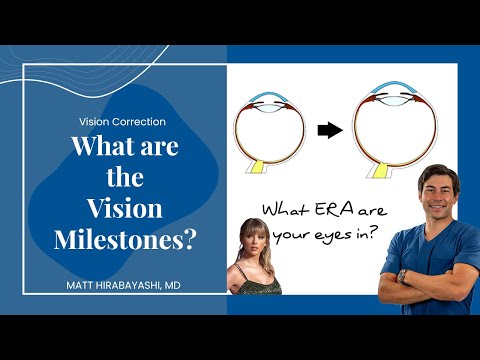
Watch educational videos about vision, refractive surgery, cataracts, and modern eye surgery. Select a thumbnail to open the video on YouTube.









Schedule a Consultation
To schedule an evaluation with Matthew Hirabayashi, MD, select the location that is most convenient for you.
This page is provided for general educational purposes and is not a substitute for an individualized medical examination, diagnosis, or treatment recommendation. Procedure candidacy, available technology, recovery instructions, risks, benefits, and surgical plans vary by patient and location.